
Introduction
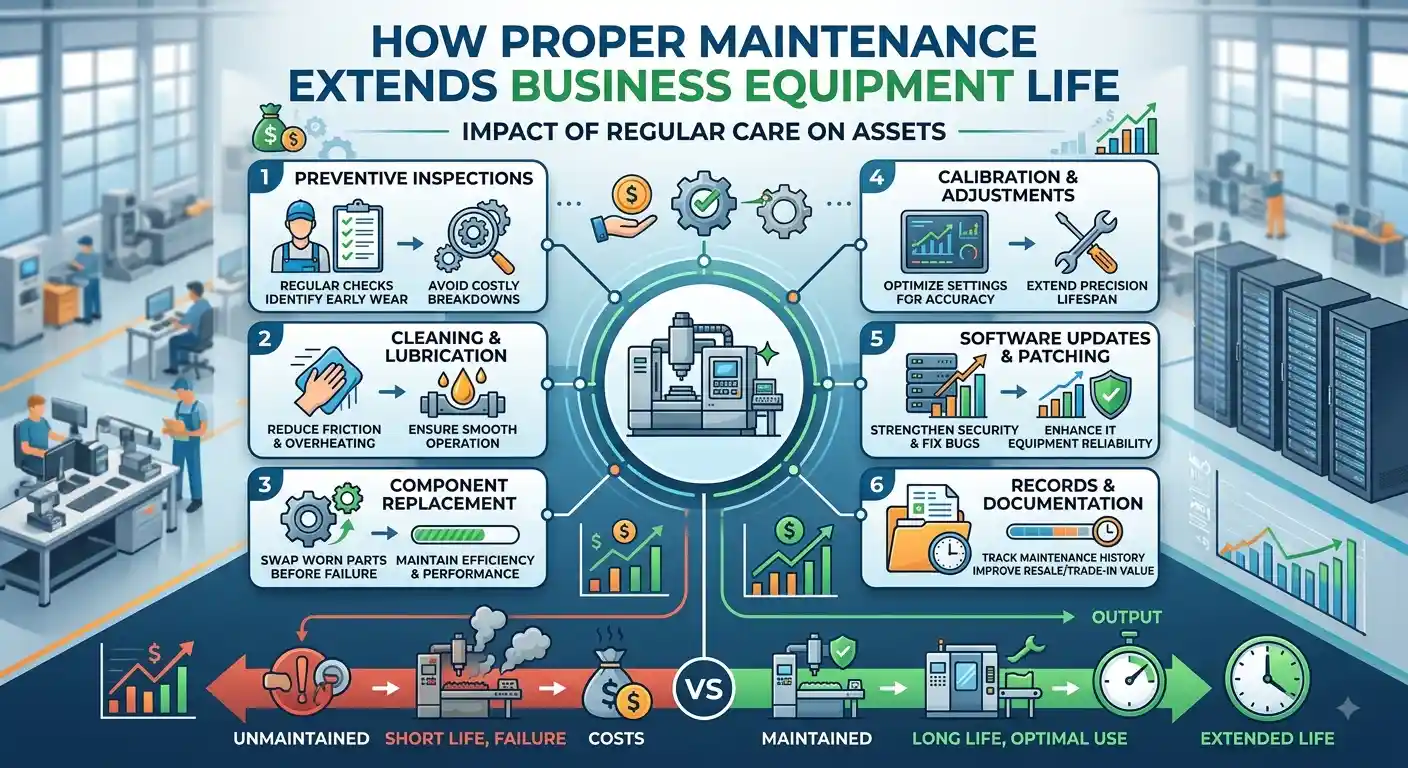
Business equipment represents a significant investment. Whether a company operates commercial air conditioning systems, industrial machinery, electrical infrastructure, generators, pumps, or other technical assets, replacing equipment earlier than expected can put unnecessary pressure on the budget.
Equipment naturally experiences wear over time, but poor maintenance can accelerate deterioration. Dust, overheating, loose components, inadequate lubrication, blocked filters, and other issues can gradually affect performance.
A structured maintenance strategy gives businesses a better opportunity to identify these conditions and address them before they cause more serious damage. An annual maintenance contract can help organize this process by establishing recurring inspections and servicing throughout the year.
Equipment Does Not Usually Fail Without Warning
Many major failures develop from smaller issues.
A component may become worn, a connection may loosen, or a system may gradually lose efficiency. The equipment may continue operating even though its condition is deteriorating.
If these warning signs are ignored, additional components may eventually be affected.

Regular inspections provide an opportunity to identify changes in equipment condition before they become more expensive problems.
Why Wear and Tear Matters
All mechanical and technical equipment experiences some degree of wear.
Moving components can deteriorate through repeated use, while electrical and electronic components can be affected by heat and environmental conditions.
The rate of deterioration depends on equipment design, workload, environment, operating practices, and maintenance quality.
Understanding these factors allows businesses to develop servicing schedules that are appropriate for their assets.
Cleaning Is More Important Than It May Seem
Accumulated dirt and debris can affect the performance of many types of equipment.
For HVAC systems, dirty filters and coils can restrict airflow and place additional strain on components. Industrial equipment may also be affected by dust and contaminants in the working environment.
Routine cleaning should therefore be considered part of an appropriate preventive maintenance strategy.
The exact cleaning requirements should always be based on the equipment and operating environment.
Lubrication Helps Protect Moving Components
Many machines contain moving parts that require appropriate lubrication.
Without sufficient lubrication, friction can increase and components may experience unnecessary wear.
Maintenance technicians can inspect relevant parts and follow the equipment manufacturer’s recommendations regarding lubrication.
Using the correct product and applying it at appropriate intervals is important because excessive or unsuitable lubrication can also cause problems.
Temperature Can Affect Equipment Life
Excessive heat can place stress on many technical systems.
Electrical components, motors, compressors, machinery, and other equipment may perform poorly when operating temperatures become too high.
Maintenance inspections can help identify blocked ventilation, dirty filters, cooling problems, or other conditions that may contribute to overheating.
Maintaining suitable operating conditions can help protect equipment from unnecessary thermal stress.
Regular Inspections Reveal Developing Faults
A maintenance technician can identify issues that may not be obvious during normal operation.
Unusual vibration, noise, leakage, corrosion, damaged wiring, or reduced performance may indicate a developing problem.
These observations can be recorded in service reports and monitored during future visits.
An annual maintenance contract can provide a consistent schedule for these inspections rather than leaving them to chance.
Maintenance History Supports Better Decisions
Businesses should maintain records of inspections and repairs.
A maintenance history can reveal how an asset has performed over time and whether repair frequency is increasing.
For example, if a machine has required several repairs within a short period, management may need to consider whether continued maintenance is financially sensible.
Without accurate records, these trends can be difficult to identify.
Older Equipment Requires Closer Attention
Older equipment is not automatically unsuitable for continued use.
Many assets can remain useful for years when properly maintained and operated within appropriate conditions.
However, aging equipment may require more frequent inspection because components can become increasingly susceptible to wear.
Businesses should monitor performance and repair history to determine whether additional maintenance or eventual replacement is appropriate.
Avoid Operating Equipment Outside Its Intended Conditions
Maintenance alone cannot compensate for improper operation.
Equipment used beyond its rated capacity or under unsuitable environmental conditions may experience accelerated deterioration.
Employees responsible for operating machinery should understand the manufacturer’s instructions and the equipment’s operating limitations.
Correct operation and professional maintenance work together to protect asset life.
Plan Maintenance Around Actual Usage
A fixed schedule may not be suitable for every asset.
Equipment used continuously may require more attention than equipment that operates only occasionally.
Businesses should consider operating hours, workload, environmental conditions, and manufacturer recommendations when determining maintenance intervals.
This makes the maintenance program more efficient because resources can be focused where they are most needed.
Repair Small Issues Before They Spread
A small defect can sometimes affect other components if it remains unresolved.
For example, a worn component may place additional stress on connected parts. A minor leak can create wider damage, while an electrical issue may affect other equipment.
Prompt corrective action can reduce the possibility of a local problem becoming a larger failure.
This is one of the practical reasons businesses invest in preventive servicing.
The Financial Benefit of Longer Asset Life
Extending the useful life of equipment can have financial advantages.
Businesses may postpone replacement expenditure, reduce installation costs, and avoid disruption associated with replacing major systems.
However, maintenance should not be used as a reason to keep an uneconomical asset indefinitely.
Managers should compare repair costs, performance, downtime, energy consumption, and remaining useful life when making replacement decisions.
How a Service Agreement Supports Asset Protection
A recurring maintenance arrangement can make it easier to keep servicing activities on schedule.
With an annual maintenance contract, businesses can establish planned visits and create an ongoing record of equipment condition.
This can be particularly useful for companies managing many assets because routine maintenance responsibilities do not depend entirely on employees remembering individual service dates.
The provider can also identify maintenance requirements during scheduled visits and communicate recommendations to management.
Choosing the Right Maintenance Provider
The provider’s technical capability has a direct effect on the quality of maintenance.
Businesses should look for professionals who understand the equipment being serviced and can follow appropriate inspection and servicing procedures.
Experience with similar installations can also be valuable because technicians may be more familiar with common faults and maintenance requirements.
When Maintenance Is No Longer Enough
Even well-maintained equipment eventually reaches the end of its useful life.
Increasing repair frequency, obsolete components, declining performance, excessive energy use, or high operating costs can indicate that replacement should be considered.
Maintenance records can help businesses recognize these changes before a complete failure forces an urgent decision.
Combine Maintenance With Asset Planning
Maintenance and replacement planning should work together.
A business can use service records to estimate which assets are likely to require significant investment in the future.
This allows management to plan capital expenditure rather than replacing equipment unexpectedly after a major breakdown.
An annual maintenance contract can support this process by generating regular information about asset condition throughout the service period.
Final Thoughts
Proper maintenance can help businesses protect valuable equipment and potentially extend its useful operating life. Regular cleaning, inspections, lubrication, performance monitoring, and timely repairs can reduce unnecessary wear and help identify problems before they become severe.
An annual maintenance contract provides a structured way to organize these activities and maintain consistent servicing throughout the year.
However, businesses should remember that maintenance is only one part of asset management. Equipment must also be operated correctly, monitored regularly, and replaced when continued operation is no longer economically practical.
By combining preventive care with accurate maintenance records and long-term asset planning, businesses can make better use of their investments while reducing the risk of premature equipment replacement.
Related Reading: The Growing Need for Reliable Gold Detection Technology
Related Reading: Why Web Hosting Com Matters for Your UAE Business Strategy — full guide
Related Reading: Beyond the Wrench: How Carrectly is Redefining Mechanical Repair and Auto Maintenance in Chicago
Related Reading: Ac Display Blinking Error — full guide